Menu

Meet Our Brokers Pricing Why Flippa AI Technology Closed Deals
Help

Sell your Shopify store.

Achieve the quickest sale, highest price, and lowest fees with Flippa.

Enter your URL to start
Use the URL for your site, store, app, channel, online business or domain
12,000+
Deals Completed Annually
400,000+
Weekly Active Buyers
$73 Billion
Active Buyer Liquidity

Everything to sell your business

Here's what happens when you list on Flippa

Create Your Listing

Present your business with the depth and credibility serious buyers expect.

Present your business with the depth and credibility serious buyers expect. Flippa listings combine verified financial and traffic data from 15+ integrations with the key metrics and business highlights. Before launch, our team reviews the listing, validates the connected data and refines the positioning to ensure your business is presented professionally and compellingly to the market.

Sell Now

Build your P&L

Your financials, categorised and normalised the way acquirers read them.

Connect your accounts or upload a CSV and BrokerAI categorises and normalises the figures into an acquisition-ready profit and loss statement. It comes out in the format acquirers read financials in, so nobody has to rebuild your numbers before they can assess the business.

Sell Now

Generate your CIM

A full information memorandum, generated from your listing data.

BrokerAI pulls your listing data and builds a Confidential Information Memorandum: executive summary, financial performance, growth opportunities and the other sections a professional buyer expects to find. It is the standard format in every M&A process, and normally the document you pay an advisor to produce.

Sell Now

Find Buyers with AI

Matched to buyers who already told us what they want.

Buyers on Flippa register what they are after: budget, deal size and the categories they buy in. BrokerAI ranks your business against that pool and surfaces the ones most likely to close. You review them and send the invitations yourself, so nothing goes out without your approval.

Sell Now

Negotiate the Deal

Offers, contracts and payment in one thread per buyer.

Every interested buyer gets their own thread, so offers, questions and counters stay in one place instead of scattered across email. Letters of intent arrive here, the purchase agreement is generated and signed here, and funds settle through escrow in your currency before the assets transfer.

Sell Now

Your Data Room

Your documents, permissioned and ready, so diligence moves faster.

Upload your financials, contracts and operating documents once, organised the way buyers expect to find them. Approved buyers get access after signing an NDA and can answer most questions themselves. Diligence then moves on what they can read rather than what they have to ask you for.

Sell Now

List to the largest community of business buyers globally

With over 400k weekly active buyers and 6,000+ family offices, institutional, and strategic buyers, Flippa offers unrivalled access to a global network. Our AI-driven matching system connects you with the right buyers for a fast and efficient sale process.

T.H
Investor
United States
1 transaction totalling $2.9M
About
I'm an operator and investor based in Denver, CO, focused on acquiring and scaling eCommerce and software businesses.
Verified Linkedin
Identity
Proof of Funds
Budget
$5M
Deal Size
$1M-$5M
D.N
CEO
United States
3 transactions totalling $1.3M
About
As Co-Founder & CEO at Mode Mobile, I’m at the forefront of transforming how people interact with technology.
Verified Linkedin
Identity
Proof of Funds
Budget
$5M
Deal Size
$100K-$2.5M
R.V
Co-Founder
United States
34 transactions totalling $756K
About
I'm a serial entrepreneur who has bought and sold over a dozen businesses, including an $8.75M exit bootstrapped from zero in under two years.
Verified Linkedin
Identity
Proof of Funds
Budget
$1M
Deal Size
$50K-$500K
V.
Founder
United States
1 transaction totalling $1.5M
About
We are a group of partners, exited SaaS founders looking to acquire SaaS companies to grow them under our holding company.
Verified Linkedin
Identity
Proof of Funds
Budget
$2M
Deal Size
$200K-$1.5M
F.S
CEO
Spain
1 transaction totalling $800K
About
I represent a company or fund and we are buying a portfolio of assets. App buyer, looking for good opportunities.
Verified Linkedin
Identity
Proof of Funds
Budget
$100M
Deal Size
$200K-$15M
A.K
Founder
India
2 transactions totalling $1.29M
About
We buy, invest & grow subscription internet businesses.
Verified Linkedin
Identity
Proof of Funds
Budget
$10M
Deal Size
$100K-$3M

Work with our global brokers who specialize in online businesses

We have 15+ business brokers that hold the Certified Mergers and Acquisitions Advisors Accreditation, and combine both entrepreneurial DNA with proven advisory capability earned and learned from the world’s leading banks, accounting firms and tech businesses.

This is an optional service with the team on hand to guide you through the exit process end-to-end.

Nick Carlucci

Nick Carlucci

Business Broker

United States

About the broker

Nick is a trusted advisor that brings B2B sales expertise to Flippa, helping entrepreneurs through asset sales with diligence and attention. In 2023, he facilitated 21 deals over $100K, ensuring smooth transitions and client satisfaction.

Goran Duskic

Goran Duskic

Business Broker

Europe

About the broker

Bringing two decades of experience as a serial entrepreneur, Goran sold his first business and ran a venture-backed API company, successfully serving Fortune 500 clients. Since 2012, he has been actively buying and selling websites on Flippa.

Market Insights

Dive into performance metrics and real-time data

SaaS, ecommerce, content, apps, and digital assets. Here's what's selling right now.

Search Intent
Trending
Time to Sell
Buyer Liquidity

Search Intent

See what keywords users are searching for over different time frames. With over 1 million searches a month Flippa is the home of buyer demand for digital businesses.


Loading...

Source: Original search queries submitted by users on the Flippa Platform

Youtube is the top search for this period. View Youtube businesses.

Trending Search Terms

See the search terms that are jumping in popularity every week, month and quarter.


Loading...

Source: Original search queries submitted by users on the Flippa platform

Time to Sell

Discover how quickly businesses of various values, from $100,000 to over $1,000,000, achieve successful sales on Flippa with our detailed breakdown.


Loading...

Source: Based on the analysis of businesses previously sold on the Flippa platform, each with a transaction value exceeding $100,000 USD

Buyer Liquidity

Over 62% of deals are done cross border on Flippa. Interact with the globe to see our global buyer base and the total and average budgets worldwide.


634K
Total Buyers
Live
191
Countries Globally
Live
$129B
In Buyer Wallet
Live

Source: Data is sourced directly from active Flippa buyers.

Selling a Shopify Store in 2026: What You Need to Know

Shopify stores are one of the most liquid categories on Flippa. Buyers know the platform, understand the transfer mechanics, and move quickly once the numbers stack up, which makes preparation the biggest lever you have over your final price.

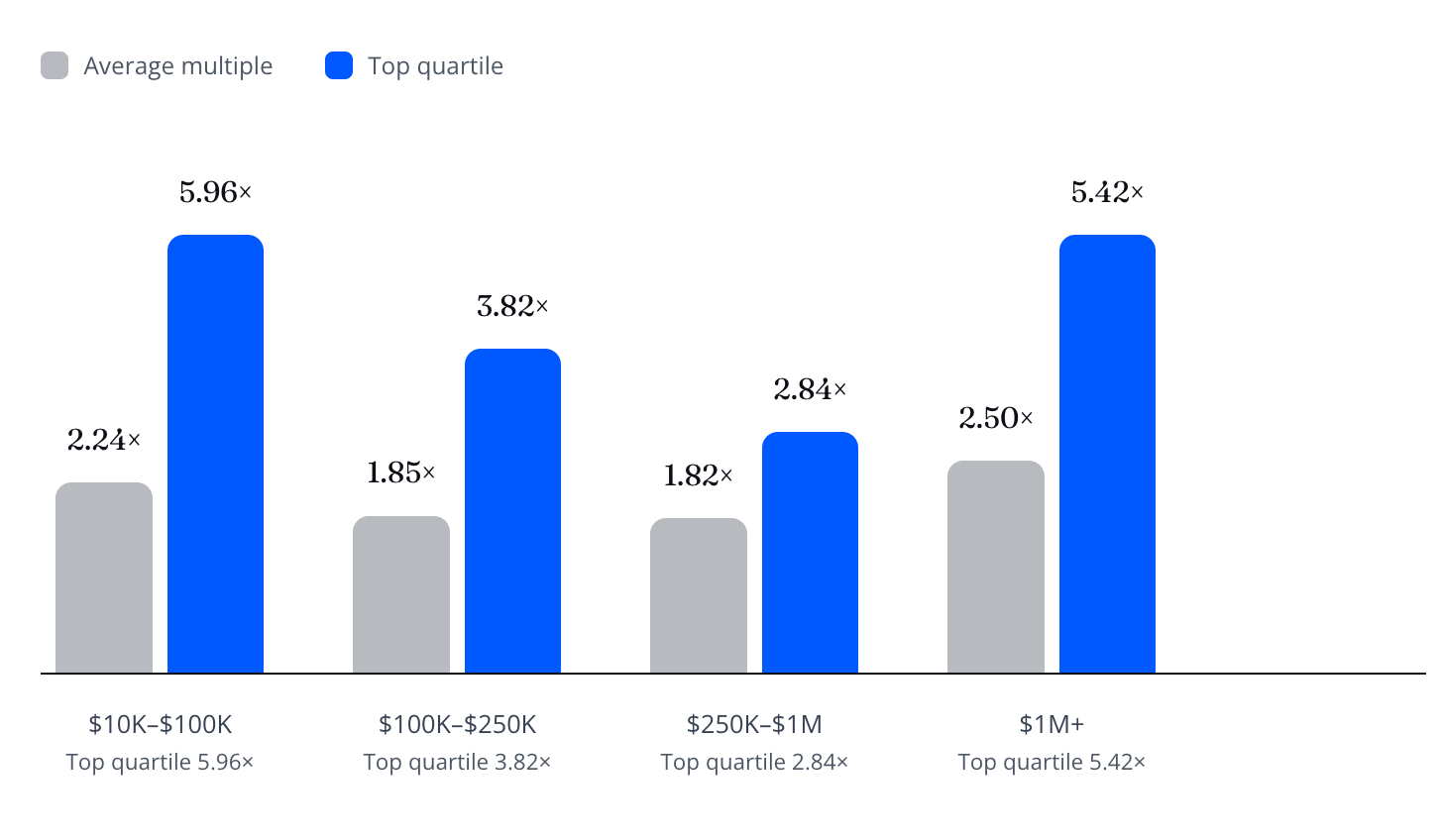
Like most ecommerce businesses, Shopify stores typically sell on a multiple of net profit. Across Flippa's marketplace in H1 2026, ecommerce businesses commanded an average 1.55x profit multiple, with top-quartile stores reaching up to 2.75x, and the gap between the two usually comes down to a genuine brand: trademarked, defensible, and not easily replicated by a competitor spinning up a similar store next month. Buyers pay a premium for repeat-purchase and subscription revenue, via apps like Recharge or Skio, and for traffic that isn't dependent on a single paid channel; a store built entirely on one Meta ad account reads as far riskier than one with a healthy mix of email, organic search, paid social and repeat customers.

What buyers look for beyond the topline: a clean Shopify admin with no third-party app conflicts, subscription and payment gateways that transfer without disruption, supplier and fulfilment relationships that survive a change of ownership, and clear documentation of margins after landed cost, ad spend and app fees, not just gross revenue. A tidy theme and app stack, rather than years of bolted-on plugins, also signals a business that's easy to run post-sale, which buyers factor into what they're willing to pay.

Timing is less about the calendar than about lead time. Diligence gaps, undocumented operations and incomplete financials are what stretch a sale out, so start preparing your store at least 90 days before you list: clean financials, an audited app stack and organised supplier and customer data all shorten the path to a serious offer once buyers start asking questions.

If you're weighing whether now's the right time to sell your Shopify store, get a free valuation benchmarked against real comparable sales, and work through the guides alongside this page to get your accounts, supplier terms and brand assets exit-ready before you talk to a broker.


Global brokers powered by AI technology. Your exit, accelerated.

Flippa Brokers

Your Flippa Broker

A dedicated advisor who's closed deals like yours. They run your process end-to-end, vetting buyers, leading negotiations, coordinating legal close, and they're accountable to your outcome.

Meet Our Brokers →
BrokerAI

Powered by BrokerAI

While your broker sleeps, BrokerAI is building your CIM, scoring inbound buyers, and managing your data room. Your broker arrives every morning with a deal that moved overnight.

View AI Technology →

Customer Testimonials

Proven exits. Real results.

By pairing dedicated brokers with the right buyers, we turn 'for sale' into 'sold' faster than anyone else.

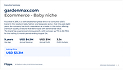
Premium baby fashion D2C brand
Ecommerce
SOLD FOR
$3.3M

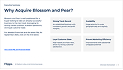
“We recently worked with Blake and Flippa on the sale of our business and the entire experience exceeded our expectations. From the first consultation to the final closing, they were professional, transparent, and deeply knowledgeable about the market. We are so thankful to Blake and the entire team at Flippa for helping us exit our business of 10 years.”
Blossom and Pear
Read on
Seller From
Australia
Buyer From
United States
Brokered by Flippa
Blake Hutchison
High-performing gallery app
App
SOLD FOR
$1.25M

“We had an excellent app-selling experience with Flippa. Overall, Flippa proved to be a trusted and efficient platform, and with Ashwin’s outstanding assistance, the experience exceeded our expectations. Highly recommend Flippa—and if you get the chance to work with Ashwin, you’ll be in the best hands!”
Nilesh Sanghani
Read on
Seller From
India
Buyer From
United States
Brokered by Flippa
Ashwin Almeida
Highly profitable channels portfolio
YouTube
SOLD FOR
$750K

“Great experience from start to finish. The process was smooth, well-structured, and everything was handled professionally. Communication was clear throughout, and the platform made it easy to manage each step of the deal. I felt like I established a personal and trustworthy relationship with the people at Flippa.”
Victor Nielsen
Read on
Seller From
Denmark
Buyer From
United States
Brokered by Flippa
Nelson Ferreira
Online store in the homeware space
Ecommerce
SOLD FOR
$314K

“Have just sold our business with Flippa. Can highly recommend Fiona & the Flippa team.We had tried to sell our business with a different broker unsuccessfully for 2+ years. Swapped over to Flippa and everything was sold within a few months. Transition was smooth and they were incredible at walking you through the whole process. Can recommend.”
Matthew Childs
Read on
Seller From
Pakistan
Buyer From
France
Brokered by Flippa
Fiona Laidlaw
Soccer Coaching AI-Powered Platform
Website
SOLD FOR
$130K

“Lawrence and the team at Flippa went above and beyond to facilitate the sale of my business. I would certainly not hesitate to recommend them, and I am sure I'll work with them again. Lawrence did a fantastic job of driving a lot of traffic to the listing and qualifying buyers - I'm very happy with the outcome!”
Adam Wright
Read on
Seller From
Australia
Buyer From
United States
Brokered by Flippa
Lawrence Fidel
Platform offering discounted deals
Website
SOLD FOR
$120K

“Great experience selling my business on Flippa. Goran was professional, responsive, and ultimately got the job done. He also really helped find a buyer, and managed the process perfectly. The deal closed successfully for a six-figure amount, and everything went smoothly. Highly recommended.”
Dominic Wells
Read on
Seller From
United States
Buyer From
Vietnam
Brokered by Flippa
Goran Duskic

FAQ

Selling on Flippa, explained

To determine the value of a Shopify store, factors such as profit, revenue, growth, traffic, customer acquisition costs, and how dependent the business is on its owner need to be considered. One reliable way to find out what a Shopify store is worth is to assess its financial performance and then compare it with the recent sales of comparable Ecommerce businesses.

The first fact to consider when calculating what a Shopify store is worth is sustainable profit. A smaller, owner-operated business could use a metric such as seller's discretionary earnings (SDE).

Buyers may then apply a valuation multiple to this figure based on factors such as the store’s size, growth, profitability, and risk. Larger, more complex Shopify businesses may find it more useful to use the earnings before interest, taxes, depreciation, and amortization (EBITDA) metrics.

Factors that can influence the valuation of a Shopify store include:

  • source and quality of website traffic
  • repeat customer rates
  • average order value
  • customer acquisition costs
  • supplier relationships
  • inventory requirements
  • level of owner involvement

An online tool, such as Flippa's free valuation calculator, can provide a starting point to find out what a Shopify store is worth. Remember that such tools only provide estimates, not a guaranteed sale price. A review of comparable transactions can provide more information.


Yes, a Shopify store can be listed for sale on an online marketplace platform. It can also be sold via a broker or as a direct sale between the owner and the buyer. Because a Shopify store is an Ecommerce business, a sale may involve assets such as its website, domain name, and brand, along with its inventory, customer data, and supplier arrangements.

Before listing a Shopify store to sell, it is important that sellers prepare all the important information that a buyer would want to assess. This is likely to include financial records, profit and loss statements, data analytics, web traffic numbers, inventory levels, and details about how involved the owner is in the day-to-day operations of the store.

A Shopify store can be listed to sell on an online marketplace like Flippa, where a seller can create a listing to attract prospective buyers. Sellers can choose to conduct the sale themselves or engage a broker to handle the process. The method a seller chooses will depend on the size and complexity of their business, the support they need, and the fees they are prepared to pay.


A Shopify store can be sold either via a listing on an online marketplace or via a broker service. Marketplaces give sellers the flexibility over how much control they want over the sale. Sellers create their own listing and communicate directly with prospective buyers. A broker handles each stage of the sales process, from help with valuation to identifying buyers, negotiation, due diligence, and final transfer.

Whether it is better to sell a Shopify store via an online marketplace or with a broker is subjective. The choice a seller makes will depend on the size and complexity of the business, the level of support required, and the fees the seller is prepared to pay. Broker services tend to have higher upfront costs than self-service marketplace listing options. However, the total cost may vary as both options generally include a success fee, which is a percentage of the sale price if the Shopify store sells.

For smaller, straightforward Shopify stores, a listing on a marketplace like Flippa can be a way to reach buyers without engaging a broker. Larger, complex businesses might benefit from the professional assistance of a broker. Sellers should always compare all the costs and included services before deciding on the most suitable package.


Shopify stores can sell for a wide variety of multiples. The multiple is usually applied to a financial metric such as seller's discretionary earnings (SDE) or earnings before interest, taxes, depreciation, and amortization (EBITDA). Smaller, owner-run Shopify stores are more commonly valued using a multiple of SDE, while larger, more complex businesses often use an EBITDA multiple.

The exact multiple that a Shopify store sells for will depend on factors including profitability, store size, customer base, and level of owner involvement in day-to-day operations. A store that has consistent profits, diverse traffic, and reliable supply chains may sell for a higher multiple than a store with declining sales, concentrated traffic sources, and a high level of dependence on the owner's knowledge. Other factors that may influence the multiple a store sells for include repeat customers, customer acquisition costs, growth potential, market competition, and the sustainability of profits.

Sellers can use recent sales of comparable businesses on platforms like Flippa to help establish a guide multiple for a valuation of their Shopify store. An online valuation calculator can also provide guidance, although any results are indicative only and should be considered alongside other valuation factors.


Selling a Shopify store can take anywhere from a few weeks to several months, or longer. Factors that influence the speed of a sale can include how prepared the seller is, the size and complexity of the business, its asking price, market demand, and the store's financial performance. Smaller stores with straightforward operations and consistent profits may sell more quickly than a larger business with more complex operations and a longer due diligence process.

There are several stages to selling a Shopify store, and each can influence the time it takes to sell. These include preparing financial and supporting information, creating a listing, engaging and negotiating with buyers, completing due diligence, and transferring all the store's data and assets to the new owner. Preparing the business and its documentation thoroughly before listing can help avoid unnecessary delays once a potential buyer is found.

Online marketplaces like Flippa provide sellers with access to a large pool of global buyers when they want to sell a Shopify store. Sellers on Flippa can choose a self-service package to manage the sale themselves or use a broker who handles the sale process. Flippa reports that, on average, businesses that use a broker sell twice as fast as those using self-service options.


When a Shopify store is sold, the seller will generally need to transfer the Shopify account to the new owner. The exact process will depend on the details of what's included in the sale and how the store is structured. If the Shopify account is included in the sale, the seller must ensure it is transferred to the buyer in a timely manner to allow the new owner to operate the store.

Situations in which the Shopify account is not transferred to a buyer when a Shopify store sells are typically when only part of the business is sold. For example, a seller might sell the brand, domain, and inventory and set up a new account for the buyer. However, if the buyer is acquiring the Shopify store as an operating business, transferring ownership of the store, including the Shopify account, is likely to be required.

The sales agreement for selling a Shopify store should clearly state exactly what will be transferred as part of the sale, including the Shopify account. The transfer should take place as part of the agreed transaction process, with the buyer receiving account access once the sale conditions have been met. Sellers should also check Shopify's conditions for transferring an account before completing a sale.


When assessing a Shopify store, buyers typically want to see financial data that demonstrates the store's revenue, profitability, costs, and tax liabilities. The exact information required will depend on the store's size and complexity.

The financial data about a Shopify store that buyers may ask to see can include:

  • Profit and loss statements detailing the store's revenue, expenses, and profit over time
  • Balance sheets that set out the store's assets and liabilities
  • Sales data setting out trends over time and sources of revenue
  • Cash flow data that shows where money comes into and flows out of the business
  • Bank and payment processing information to verify reported revenue and cash flow
  • Tax returns to verify financial performance
  • Details of add-backs where appropriate to calculate Seller's Discretionary Earnings (SDE)
  • Inventory information that details stock on hand and future obligations and costs

Prospective buyers of a Shopify store may also want to review information that can affect financial performance. This can include web traffic analytics, supplier costs, and customer acquisition costs. As negotiations progress, sellers should be prepared to provide more detailed information as part of due diligence. With services like Flippa, sellers can require buyers to sign a non-disclosure agreement (NDA) before viewing financial data.


To sell a Shopify store with Flippa, sellers need to prepare information about the business, choose a sales package, create a listing, connect with potential buyers, facilitate due diligence, and complete the transaction by transferring assets to the new owner.

The main steps to sell a Shopify store with Flippa are:

  1. Prepare financial information about the store. Data such as revenue, profit and loss, and liabilities will help with valuation, and are likely to be requested by potential buyers.
  2. Value the business. Combine financial information with a review of recent sales of comparable businesses to establish a realistic asking price. Flippa's free valuation calculator can help.
  3. Choose a sales package. Flippa offers self-service options with different levels of support and promotion. Fees for sales packages vary. Sellers can also select to use a broker who handles the sale on their behalf.
  4. Create a listing. Provide information about the Shopify store, including its financial performance, products, traffic, customers, and operations. Sellers can request that buyers sign a non-disclosure agreement (NDA) before viewing such information.
  5. Connect with buyers. Respond promptly to inquiries and provide additional information as appropriate.
  6. Facilitate due diligence. A prospective buyer may want to review the store's financial records, analytics, assets, and other information before making an offer.
  7. Complete the sale. Once the sale conditions are met, the seller transfers the business assets to the buyer.


Flippa allows sellers to control access to confidential supplier and revenue data when listing a Shopify store for sale. Sensitive information such as supplier details, revenue data, and financial records does not have to be publicly displayed on a marketplace listing.

Sellers on Flippa can require buyers to sign a non-disclosure agreement (NDA) before viewing any confidential information. An NDA typically means that the buyer must keep specified information confidential and limits how they can disclose that information to others. For a Shopify store, this could include revenue and profit figures, bank statements, customer data, supplier names and pricing, advertising performance, business processes, and other commercially sensitive information.

When selling a Shopify store with Flippa, sellers should provide enough financial and operational information in their listing for potential buyers to assess the business, but also take appropriate steps to protect commercially sensitive information. Sellers should consider which information needs to be disclosed at each stage of the transaction and only provide sensitive data when appropriate.

The specific confidentiality features available to a seller of a Shopify store on Flippa vary depending on the sales package they choose. Some packages include them in the price; others provide them as optional extras. If a seller opts to use a broker, the broker can facilitate any confidentiality agreements.

Sell your Shopify store.

Achieve the quickest sale, highest price, and lowest fees with Flippa.

Enter your URL to start
Use the URL for your site, store, app, channel, online business or domain

Need Help?

We understand that buying or selling a digital business isn’t easy. If you have any questions or require assistance, feel free to contact us anytime.

Contact Customer Support

Search our knowledge base for answers to common questions.

Go to Flippa Help Center

Read Flippa’s Customer Guide

Learn how we can help you buy and sell online businesses.

Learn more

© 2026 Flippa.com Pty Ltd. All rights reserved.

Loading...
Sorry! The content failed to load, please close the modal and try again.
Oops! Something bad happened, please try again or contact our support team.